

Hot & Cold Packs - Cold Therapy Packs, Dry Heat Packs & Moist Heat Packs
If you're looking for an effective and convenient way to apply hot or cold therapy, ScripHessco has a wide variety of hot and cold packs for sale online. As a early injury protocol often calls for alternating between heat and ice therapy, combination hot and cold packs are a convenient economical solution. Dry heat packs are ideal for deep tissue heating, while moist heating pads are perfect for targeted pain relief. Cold therapy is great for reducing inflammation and swelling, and instant hot and cold packs provide quick relief when you need it most. With trusted name brands like Core Products, Relief Pak, and NRG, you can be sure you're getting the highest quality hot and cold packs available. Shop confidently with our flat rate shipping, exceptional service.
HEATING PAD BUYING GUIDE
Many people suffer from chronic pain, and over-the-counter medications or prescriptions may not provide enough relief. You may also experience short-term or intermittent pain, such as when you exercise too hard, pull a muscle, or lift heavy objects. Painful menstrual cramps, sore muscles, blood flow issues or joint pain are just a few of the other conditions that benefit from heat therapy provided by a heating pad or wrap.
BEST HEATING PADS FOR BACK & NECK PAIN
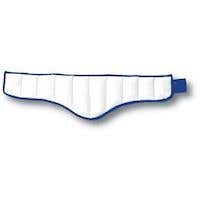
Best Cervical Heat Wrap: Thera-Temp Microwaveable Moist Heat Wrap
The Thera-Temp microwavable cervical heating wrap is particularly effective at providing relief from neck pain. It wraps around the cervical spine of the neck and provides coverage around the clavicles and shoulders.
There's soft fleece on the side that touches your skin and a vapor barrier on the outside. This vapor barrier directs the moist heat toward your body. It uses natural beads that retain heat.
Take a look at the Thera-Temp cervical heating wrap here.
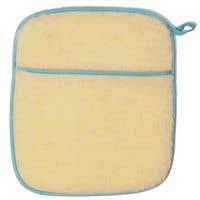
Best Microwaveable Heating Pad: Micro Hottie Wool Heat Pack
The Micro Hottie wool heat pack heats in the microwave in a couple of minutes. Its small size makes it highly portable. Use it on smaller areas of the body, such as your shoulder, abdomen or knee. It also easily slides into clothing, so you don't need to worry about holding it in place.
The Micro Hottie retains warmth for about five hours. The center contains no gels or chemicals, and it is odorless when heating. You soak it with water, which the absorbent pad soaks up without leaking. The moist heat delivers effective pain relief deep into your muscles. This heating pad measures 10 inches long by 8 inches wide by 1 inch deep.
Examine the benefits of the Micro Hottie here.
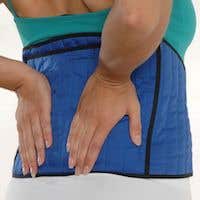
Best Dry Heating Pad: Hotties Backwrap Cotton Quilted Hot Pack
The Hotties Backwrap is specifically designed for lower back pain. This heating pad has a quilted cotton cover, so it feels like a blanket against your skin. It does not use a cord, so you get complete freedom of movement and can wear it under your clothing when traveling.
It heats in the microwave, and it stays warm for up to five hours. And because it is reusable, it can be reheated hundreds of times.
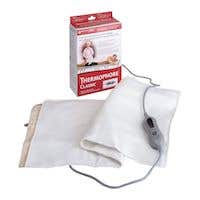
Best Moist Heating Pad: Thermophore® Classic Moist Heat Packs
If you’re in need of a good moist heating pad for everyday aches, pains and soreness, the Thermophore Classic is the best choice. It's available in three sizes, including 14x14 inches, 14x27 inches, and 4x17 inches.
These heating pads are effective at helping with menstrual cramps, neck pain and sore backs because of their intense, moist heat. There's a safety switch with an automatic shutoff after 40 minutes. A removable flannel cover facilitates cleanliness. There's no need to moisten this heating pad.
Take a look at the Thermophore Classic heating pads here.
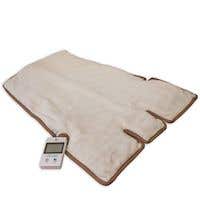
Best Extra-Large Heating Pad: NRG® Digital Full Back Warmer
When you have widespread back pain or you’re a larger person, the NRG® Digital full-back warmer heating pad is an excellent choice. It measures 27 inches long by 25 inches wide and heats up to 166 degrees Fahrenheit. It automatically shuts off after 30 minutes.
A soft microplush cover can be removed and laundered in the washing machine. The temperature controller is digital, so you get a precise readout. This moist heating pad is particularly effective at relieving sore muscles throughout your back.
Check out this NRG® heating pad here.
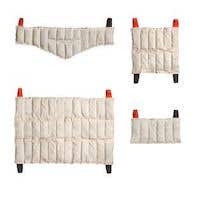
Best Budget Heating Pad: Relief Pak® Moist Heat Pack
You don't have to spend a lot of money on a heating pad in order to get relief. The Relief Pak comes in multiple sizes, and the smallest one (called the half size) is less than $10. These other sizes in this line of products include the knee/shoulder, neck contour, small spine, large spine, standard and oversize.
Each of these products features a bentonite filling, which is a type of absorbent clay. After heating the insert in the microwave or a pot of hot water on the stove, it delivers warmth to your body for up to 30 minutes. This is a good option for treating stiff neck, backache, arthritis, sprains, and bruises.
Take a look at the Relief Pak line of products here.
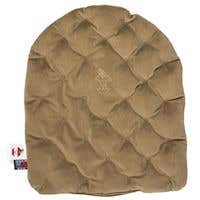
Best Heating Pad With Beads: Core® MicroBeads™ Moist Heat Therapy Pack
MicroBeads™ are a natural and drug free method to help relieve muscular aches and pains, arthritis, fibromyalgia, cramping, headaches, and more. MicroBeads™ absorb moisture from the air and release it when heated, delivering soothing moist heat. The plush fabric of MicroBeads™ is soft to the touch and gentle on skin. Made with high quality fabric and the finest stitching.
Available in: Small 5” x 12”, Cervical 5” x 25”, and Large 11” x 14”
Review the size specifications and other details of the Core MicroBeads Moist Heat Therapy Packs here.
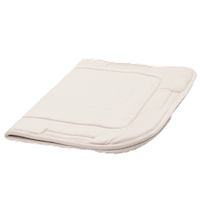
Best Heat Pack Cover: Relief Pak® Moist Heat Pack Cover
Applying heat directly onto your skin could cause an injury. The Relief Pak® moist heat pack cover protects your skin. Its soft microfiber cover is machine washable. Hook and loop closures keep it in place over the heat pack.
Keep one on hand as a replacement cover for your moist heat pack. You can have one cover in use and one in the laundry.
Take a look at the Relief Pak heat cover sizes here.
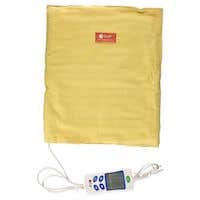
Best Heating Pad With Digital Controls: Chattanooga TheraTherm Electric Moist Heating Pads
The TheraTherm electric moist heating pad offers digital controls with oversized digits that are easy to read. It's available in three rectangular sizes, including 14 by 14 inches 14 by 27 inches and 7 by 15 inches. There's also an option for the neck and shoulder contour heating pad. Its shape is designed to wrap around the back of your neck and cover your upper back and shoulders.
These heating pads are particularly effective at quick heating because of its ceramic heating element. The 100% cotton cover is soft against skin and can be washed in the washing machine for convenience. You can set its timer for one to 60 minutes, and it automatically shuts off after 60 minutes. Customize the temperature in one-degree increments from 113 to 166 degrees Fahrenheit.
Take a look at these Theratherm heating pads here.
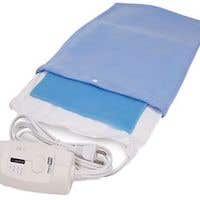
Best Dual Heating Pad: Thera-Med® Professional Dual Moist Dry Heating Pad
When you aren't sure of whether dry heat or moist heat is right for you, the Thera-Med Professional Dual moist heat and dry heat pad is a great option. You can use it with or without the insert and it comes in medium and extra-large sizes, making it effective on large areas, such as the back or upper thigh.
For convenience, it offers a flexible exterior pad with a soft, machine washable cover. There are four heat settings, including warm, low, medium and high.
Turn it off or on with the ergonomically designed, hand-held controller, which offers color-coded LED indicators, so you can easily use it in the dark. Its 40-minute auto shut-off feature prevents you from getting injured if you fall asleep while using it.
Review the other features of the Thera-Med Professional dual heating pad today.
ADDITIONAL INFORMATION
Moist vs. Dry Heating Pads:
When shopping for a heating pad, you'll notice moist heat and dry heat options. Moist heating refers to an insert that can absorb water. The unit then heats the insert. Moist heat penetrates deeper into your tissues, so it may help with pulled muscles, cramps and other soft tissue issues.
Dry heat tends to last longer and is more effective on the surface; many prefer this for painful joints and sore vertebrae. Some people find dry heat easier to apply.
For the most part, using moist heat versus dry heat is a matter of personal preference. You may also find that your sore muscles respond better to moist heat, but your achy shoulder does better with dry heat. Many people choose one of each type of heating pad to keep on hand for when they need heat therapy.
Using a Heating Pad:
Many people are worried about accidentally falling asleep while using a heating pad. But almost every new heating pad features auto shut-off. With this feature, the heating pad automatically shuts off after two hours.
Try to limit a session to no more than 20 minutes at a time since a typical moist heating pad will cool off after this duration. Give yourself a 90-minute break between sessions with any type of heating pad.
Benefits of Heating Pads:
Heating pads do not require a doctor's prescription. You can use them along with an over-the-counter or prescription pain relief medication or muscle relaxant. Many physical therapists recommend using heating pads after doing exercises.
Some even qualify for reimbursement under Flexible Spending Accounts (FSAs). If you have an FSA card, you may be able to pay for qualifying products with it.
Heating pads don't take up a lot of space, so you can bring them with you when you travel. There are few side effects to using a heating pad, although it's a good idea to check with your doctor before starting any type of self-treatment at home for your pain.
Common Conditions:
Heating pads help with many short-term and long-term pain conditions. Back pain (particularly lower back pain) is a common complaint, and it's one of the leading reasons why people go to the doctor, especially among people who lift, bend, reach or pull a lot.
If you have a spinal disorder—such as a slipped or herniated disc—heating pads may help. Shoulder pain is also common, and it may be caused by arthritis, tendonitis or a tear to a ligament or tendon.
Applying heat may also reduce the pain of menstrual cramps, which is caused by powerful muscle contractions of the uterus. The cramping and pain is often worse in women with polycystic ovarian syndrome (PCOS) or endometriosis.
No matter the condition, your muscles can greatly benefit from heat treatment. If you have sore joints or sore muscles after an intense workout or prolonged activity, using heat helps restore blood flow to the damaged tissues. Many people find heat therapy helpful beginning 48 hours after an injury or surgery.